Welcome! Our laboratory investigates human herpesviruses, with primary focus on Kaposi’s Sarcoma Herpesvirus (KSHV). Our research focus is on the viral lifecycle and the host and environmental factors that may influence viral replication. We apply molecular and cellular based methods to examine the proteins that control viral DNA replication and the environmental chemicals and stressors that promote virus reactivation.
KSHV Viral DNA Replication
Viral DNA replication and the KSHV DNA replication proteins are essential to successful viral replication. Our focus is characterizing the functions and molecular interactions of the core KSHV DNA replication proteins in order to develop potential therapeutic strategies against KSHV infection.
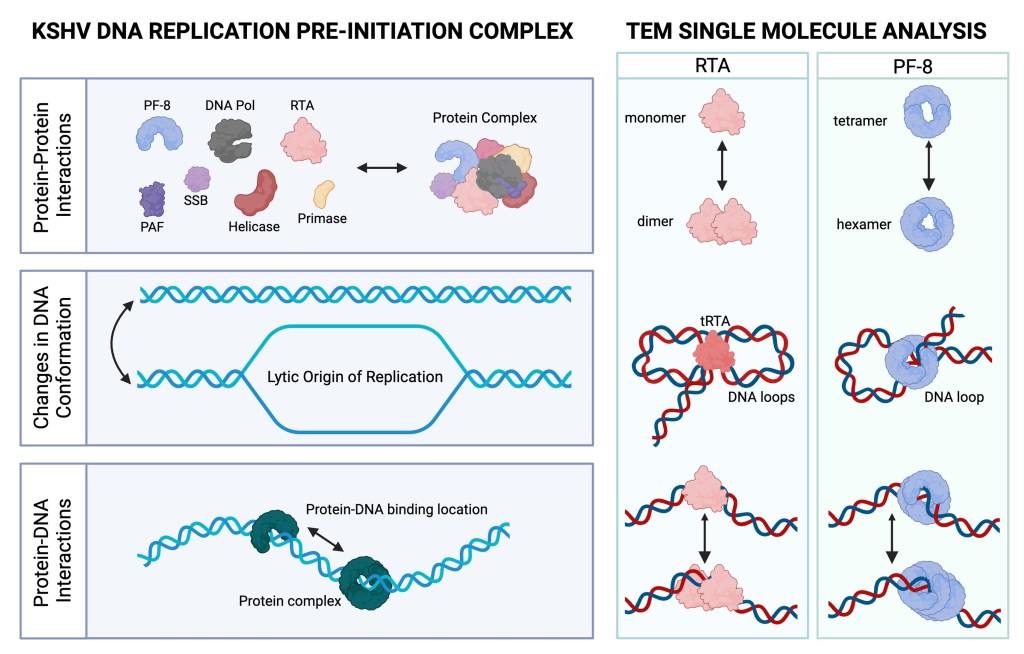
Single Molecule Transmission Electron Microscopy
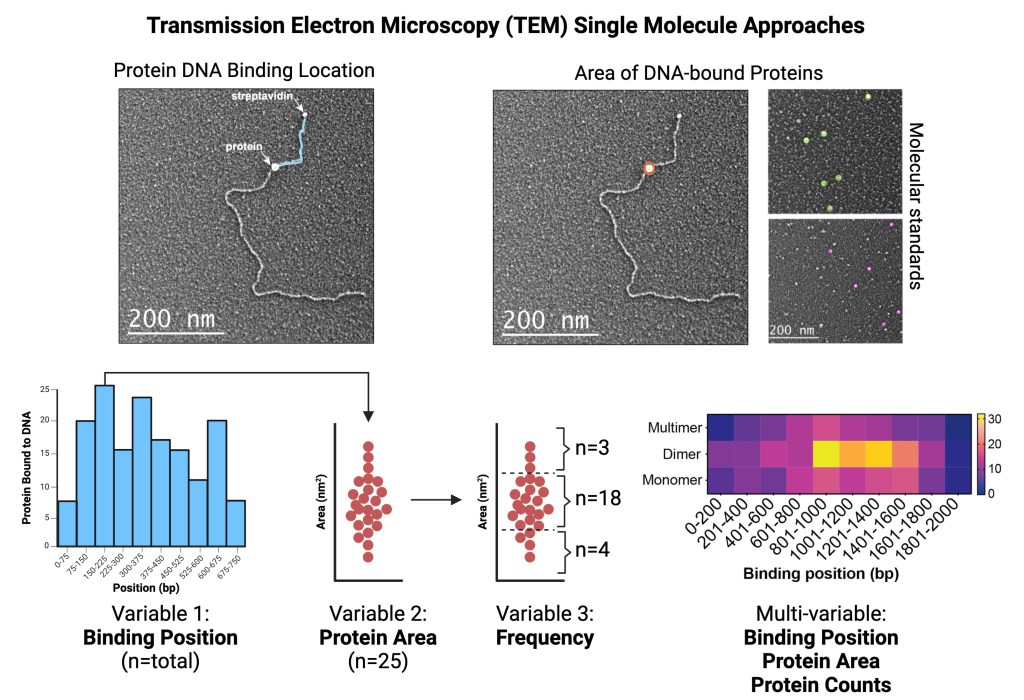
Using high-resolution transmission electron microscopy (TEM), we investigate the molecular interactions between viral proteins and DNA. Quantitative analysis of TEM micrographs allows us to map KSHV protein binding preferences, measure protein size and area to infer oligomeric state, and integrate these parameters into multivariable analyses that reveal patterns of viral DNA–protein organization.
KSHV Reactivation
KSHV, like all herpesviruses establishes a lifelong infection. Viral infections is divided into two phases of its lifecycle, lytic (active) and latent (dormant). After an initial lytic burst of primary infection, virally infected cells transition into the latent phase. During latency, the linear 165kb double stranded DNA viral genome forms an episome (circular double stranded DNA structure) chromatinized with host cell histones and tethered to the host cell chromosomes. Gene expression during latency is restricted to a small subset of viral genes and miRNAs in order to maintain viral episome, avoid immune surveillance and promote infected cell survival. Over the course of infection, viral reactivation, the shift from latency to an active infection, occurs sporadically. Spontaneous lytic reactivation in a KSHV infected individual is necessary for persistent viral infection, disease and oncogenesis.
How does human behavior influence herpesvirus lifecycle?
Is exposure to ethanol a driver of KSHV reactivation?


